More than tracking: How diet apps quietly changed my relationship with food
Have you ever stared into the fridge, unsure what to eat—again? I used to live in that cycle: confused, overwhelmed, and disconnected from my body’s real needs. Then I found a simple tool that didn’t just count calories—it helped me listen. It wasn’t about perfection, but awareness. Over time, meals became calmer, choices clearer, and my energy steadier. This isn’t a story about extreme diets or willpower. It’s about how a small digital habit created real, lasting shifts—ones I never expected.
The Everyday Struggle: Why Eating Well Feels So Hard
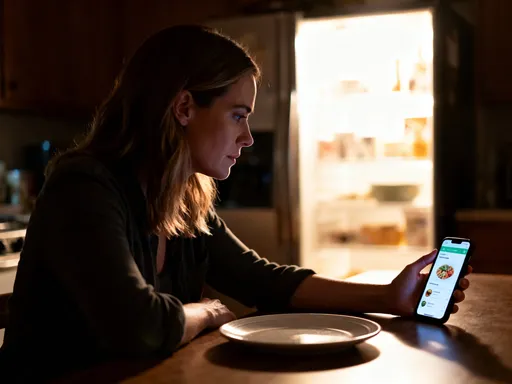
Let’s be honest—most of us aren’t failing because we lack willpower. We’re just tired. Tired from long days, endless to-do lists, and the constant mental load of running a home. I remember so many nights standing in front of the open fridge, one hand absently reaching for leftovers or a half-melted chocolate bar, not because I was truly hungry, but because my brain needed a break. Sound familiar? That moment wasn’t about food. It was about stress, fatigue, and the lack of space to pause and ask, What do I actually need right now?
Healthy eating advice often feels like it’s designed for someone else—someone with extra time, endless energy, and a personal chef. But real life doesn’t work that way. Between school drop-offs, work emails, laundry piles, and bedtime routines, who has the mental bandwidth to decode nutrition labels or plan five balanced meals a day? And then there’s the noise: conflicting headlines about carbs, fats, superfoods, detoxes. One day kale is a miracle food, the next it’s supposedly toxic. No wonder so many of us just shut down and reach for what’s easy.
What I didn’t realize back then was that this cycle was slowly disconnecting me from my body. I’d eat without thinking, feel sluggish afterward, blame myself, and then repeat. There was no real connection between what I put on my plate and how I felt the rest of the day. It wasn’t rebellion or laziness—it was simply not having the tools to see the patterns. I was making decisions in the dark, guided by habit, emotion, or convenience, not by what truly nourished me. That changed when I stopped looking for a diet and started looking for clarity.
Not Just Numbers: How Diet Apps Became My Daily Compass
I’ll admit, I downloaded my first diet-tracking app with low expectations. I thought it would be one more voice in my head saying, You shouldn’t have eaten that. But what surprised me was how gentle it actually felt. Instead of judgment, I got insight. After logging a few days of meals—yes, even the 3 p.m. cookie and the rushed sandwich at my desk—I started to see trends. On days when I skipped breakfast or loaded up on refined carbs, my energy dipped hard by 2 p.m. On days when I included protein and vegetables, I felt steady. On weekends when I ate late and heavy, I slept poorly. These weren’t rules from a magazine. They were my own patterns, reflected back to me in a way I could finally understand.
The app didn’t tell me to cut anything out. It didn’t shame me for eating pasta or having dessert. It simply showed me the consequences of my choices—how they showed up in my mood, energy, and sleep. That subtle shift—from external rules to personal feedback—was everything. I wasn’t trying to fit into someone else’s idea of ‘healthy.’ I was learning what worked for me. And that made all the difference. Slowly, I stopped seeing the app as a strict taskmaster and started thinking of it as a quiet companion, one that helped me tune in instead of tune out.
What I loved most was how it made the invisible visible. Before, I’d feel bloated or tired and have no idea why. Now, I could look back and see, Oh, I had three servings of dairy yesterday—maybe that’s it. Or, I didn’t drink enough water today, and no wonder my head hurts. It wasn’t about perfection. It was about connection. The numbers weren’t the goal—the awareness was. And that awareness gave me back a sense of control I hadn’t realized I’d lost.
From Tracking to Trusting: Building a Healthier Relationship with Food
At first, logging meals felt like homework. I’d forget to do it, or I’d get frustrated when I couldn’t find the exact brand of yogurt in the database. But after a few weeks, something shifted. I wasn’t just tracking food—I was learning to check in with myself. Before I’d eat, I’d pause and ask, Am I actually hungry, or am I just stressed? That simple question changed everything. I started to notice that I often reached for snacks not because my stomach was growling, but because I was overwhelmed, bored, or emotionally drained.
The app didn’t fix that—but it helped me see it. And once I could see it, I could make different choices. Instead of automatically grabbing a handful of chips after a tough phone call with my mom, I’d take five deep breaths, drink a glass of water, or step outside for fresh air. Sometimes I still ate the chips, and that was okay. But now it was a choice, not a reflex. That’s when I realized the real power of tracking wasn’t in the data—it was in building mindfulness. The app was like a mirror, reflecting not just what I ate, but why.
Over time, I needed the app less. I didn’t have to log every bite to know how I’d feel after a sugar crash. I could trust my body again. That’s the irony—using a digital tool to become more intuitive. It wasn’t about becoming obsessed with calories or macros. It was about using technology to rebuild trust—with my body, with my choices, with myself. And that trust made eating feel less like a battle and more like a conversation.
Family Meals Made Easier: When Tools Help Everyone Eat Better
One of the biggest surprises? The changes didn’t stop with me. Once I started paying attention to my own patterns, I naturally began thinking about our family meals. Dinner used to be a source of stress—rushing home, staring into the fridge, and throwing together whatever was easiest, often ending in complaints from the kids or my partner saying, Is this all vegetables again? But with the app’s meal suggestions and balanced plate reminders, I started planning ahead. I’d look at the week’s nutrient summary and notice we weren’t getting enough fiber or iron. So I’d add lentils to the soup or swap white rice for quinoa.
And guess what? The kids didn’t notice the changes—but they ate them. I started blending pureed carrots into pasta sauce, adding spinach to scrambled eggs, and offering fruit with breakfast instead of juice. The app helped me see how small tweaks could add up to real nutritional improvements without making anyone feel deprived. My daughter, who used to refuse anything green, now asks for broccoli ‘like Mom makes it.’ My son even tried hummus after seeing it in one of the app’s suggested snack ideas. It wasn’t magic—it was consistency, creativity, and a little digital nudge.
What I didn’t expect was how it changed the tone of our meals. Instead of nagging or negotiating, we started talking about food in a positive way. This soup has beans—they give us energy! or These berries help your brain learn at school. My husband noticed he felt less sluggish after lunch and asked me how I’d been planning our meals. When I showed him the app, he downloaded it too. Now we compare notes sometimes—‘I felt so awake today—must’ve been that salmon last night.’ It became a shared language, a quiet way to support each other without pressure or criticism.
Beyond the Kitchen: How Small Changes Sparked Bigger Growth
Here’s what no one tells you: when you stop fighting with food, you gain energy—for everything else. I didn’t set out to be more productive or confident. But as my eating became more balanced and less emotional, I noticed subtle shifts in other areas. I could focus better during work calls. I had more patience with the kids during meltdowns. I even started going for walks not because I ‘had to burn off’ dinner, but because I genuinely wanted to move my body.
That shift—from obligation to desire—was huge. I wasn’t exercising to punish myself. I was moving because I felt good and wanted to feel even better. The same thing happened with sleep. Once I realized how much late-night snacking disrupted my rest, I started winding down earlier. And with better sleep, my mood improved. I snapped less. I laughed more. I felt more like the version of myself I wanted to be.
It wasn’t linear, of course. There were days I forgot to log, days I ate cake for breakfast (yes, really), and days I felt overwhelmed all over again. But the difference was that now I had tools to reset. I could look back at my data, see the pattern, and make a small correction—like drinking more water or adding protein to my next meal. That sense of agency spilled over into other parts of my life. I started saying no to things that drained me. I set boundaries at work. I made time for things that brought me joy, like reading or gardening. The app didn’t cause all of this—but it created the foundation. By helping me care for my body, it gave me the space to care for myself in deeper ways.
Making It Work: Simple Ways to Use Diet Apps Without Obsession
I’ll be honest—not every experience with tracking has been smooth. There was a time I became too focused on the numbers, checking the app constantly, feeling anxious if I went over my calorie goal. That’s when I learned the most important lesson: these tools are meant to serve you, not control you. If it starts to feel stressful, it’s time to step back. I’ve developed a few simple rules that help me use the app in a healthy, balanced way.
First, I focus on trends, not daily totals. Instead of obsessing over hitting exactly 1,800 calories every day, I look at the week as a whole. Were most of my meals balanced? Did I eat enough protein and vegetables? Did I feel good? That’s what matters. Second, I use non-scale victories as my real markers of success. Better sleep. Steadier energy. Less bloating. More confidence in my clothes. These tell me more than any number on a screen.
Third, I give myself permission to pause. There are weeks—like vacations or busy holidays—when I don’t log at all. And that’s okay. The app is there when I need it, not as a prison, but as a resource. I also turn off notifications. I don’t need a buzz at 8 p.m. reminding me to log dinner. That just adds stress. And finally, I pair tracking with self-compassion. If I eat something ‘off-plan,’ I don’t beat myself up. I just notice how I feel and move on. The goal isn’t perfection—it’s awareness, kindness, and progress.
The Real Win: Feeling at Home in Your Body Again
Looking back, the biggest change wasn’t how I look. It was how I feel. I don’t wake up dreading the scale or counting calories in my head. I don’t feel guilty for enjoying a slice of birthday cake or ordering takeout after a long day. Food isn’t the enemy. It’s fuel, yes, but also comfort, connection, and joy. The app helped me find balance—not by restricting, but by understanding.
What I’ve gained is something deeper: peace. The constant inner critic has quieted. I no longer feel at war with my body. Instead, there’s a sense of partnership, of listening and responding with care. I know now that I don’t need extreme diets or rigid rules to feel good. I just need awareness, a little support, and the willingness to pay attention.
Technology didn’t fix my life. But it gave me a window into myself—one I might never have opened otherwise. It helped me slow down, tune in, and make choices that honor who I am and how I want to feel. And in a world that constantly pulls us in a million directions, that’s a gift. So if you’re standing in front of the fridge again, unsure what to eat, know this: you’re not broken. You just might need a little help seeing the patterns. And sometimes, that help comes in the form of an app—one that doesn’t judge, but gently reminds you: you know your body better than anyone. You just needed a way to listen.