You Gotta See These San Francisco Spots – Pure Magic on Every Corner
San Francisco isn’t just a city—it’s a living postcard. From the golden glow of the Golden Gate Bridge at sunrise to the colorful rows of Painted Ladies against a fog-draped sky, every turn feels like stepping into a photograph. I’ve walked its hills, chased the light, and found where the city truly shines through its iconic buildings. These aren’t just landmarks; they’re backdrops to unforgettable moments. Let me take you to the spots that made me stop, stare, and say, “This is why we travel.” With a camera in hand and a heart open to beauty, San Francisco reveals itself in layers—each corner offering a new perspective, each structure telling a story centuries in the making. Whether you’re a seasoned traveler or planning your first visit, these destinations promise not just views, but memories etched in light and color.
The Golden Gate Bridge – More Than Just an Icon
The Golden Gate Bridge stands as one of the most recognized structures in the world, not only for its engineering brilliance but for the emotional resonance it carries. Spanning 1.7 miles across the Golden Gate Strait, this suspension bridge connects San Francisco to Marin County and has welcomed travelers since 1937. Its International Orange hue was chosen both for visibility in fog and for harmony with the natural landscape, making it a visual anchor against the shifting moods of sky and sea. While many see it from a distance, the true magic lies in experiencing it from multiple vantage points that reveal its scale, texture, and relationship with the surrounding environment.
For photographers and visitors seeking a breathtaking first impression, Battery Spencer on the northern side offers one of the most dramatic views. Nestled in the Marin Headlands, this overlook provides a panoramic scene where the bridge arcs gracefully over the water, often partially shrouded in morning fog. Arriving early—ideally between 6:00 and 7:30 a.m.—increases the chances of catching the bridge bathed in soft, golden light while the fog lifts like theater curtains. This time of day also tends to be less crowded, allowing for uninterrupted focus on composition and framing. The contrast between the steel structure and the cool marine layer creates a sense of depth and drama that few urban landmarks can match.
Another powerful yet often overlooked perspective is from Fort Point, located directly beneath the southern anchorage of the bridge. This Civil War–era brick fortress offers a unique ground-level intimacy with the structure. Standing inside its arched chambers or walking along the curved shoreline, visitors can look up at the massive steel girders soaring overhead. It’s here that the sheer magnitude of the bridge becomes tangible—the rivets, the cables, the rhythmic patterns of the trusses—all speaking to the craftsmanship of a bygone era. On clear days, sunlight filters through the lattice work, casting intricate shadows that shift with the hour, offering endless opportunities for creative photography.
What makes the Golden Gate Bridge endure as a must-see destination is not just its visual appeal but its symbolic weight. It represents connection, ambition, and resilience. Designed during the Great Depression, its construction provided thousands of jobs and became a beacon of hope. Today, it continues to inspire awe, not only for its form but for what it stands for. Whether seen from a distance or experienced up close, it reminds us that human ingenuity can create beauty as well as function. For families, couples, and solo travelers alike, a moment spent beneath or beside this marvel is a moment of reflection—a pause in the rush of daily life to appreciate something greater than ourselves.
Painted Ladies & Alamo Square – Where History Meets Charm
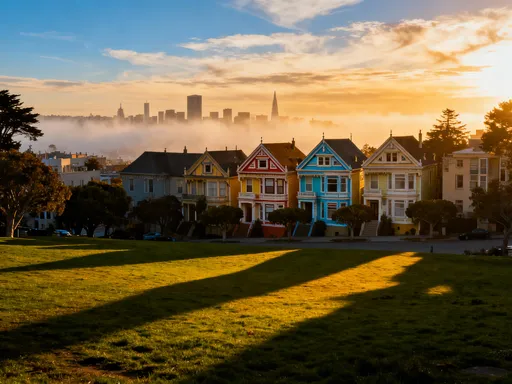
Scattered across San Francisco’s skyline like jewels on a velvet cloth, the Painted Ladies of Alamo Square are perhaps the city’s most photographed Victorian homes. Officially known as the “Postcard Row,” these 19th-century houses showcase the ornate woodwork, turrets, bay windows, and vibrant colors that define the Queen Anne style. Restored and maintained with care, they stand as a testament to the city’s architectural heritage and its commitment to preserving beauty amid modern growth. Behind them, the contrast of the downtown skyline creates a striking juxtaposition—history and progress existing side by side in perfect balance.
The best way to experience the Painted Ladies is from Alamo Square Park, a grassy expanse directly across the street that offers a full frontal view of the row. The park’s gentle slope provides a natural stage, allowing photographers to capture the houses with the cityscape rising in the background. The ideal time to visit is during golden hour—the hour after sunrise or before sunset—when the warm light bathes the facades in a soft glow, enhancing their colors and casting long, dramatic shadows. On clear evenings, the sight of the sun dipping behind the Transamerica Pyramid while the houses remain illuminated is nothing short of cinematic.
What many visitors don’t realize is that the current vibrancy of these homes is the result of a dedicated preservation movement. In the 1960s and 70s, many Victorian homes in San Francisco were lost to urban development. Thanks to community efforts and historic designation, the Painted Ladies were saved and eventually repainted in coordinated, eye-catching palettes. Each color was chosen not only for aesthetic appeal but to highlight architectural details—gingerbread trim, window surrounds, and decorative shingles. This attention to detail transforms the row into more than just a backdrop; it becomes a celebration of craftsmanship and individuality within a shared streetscape.
For families and travelers, Alamo Square Park is more than just a photo spot—it’s a place of connection. Parents push strollers along the pathways, children fly kites on the lawn, and locals gather for picnics as the city hums in the distance. It’s a rare urban space where relaxation and beauty coexist. Standing at the edge of the park with a camera or simply with open eyes, one can’t help but feel a sense of joy. The Painted Ladies don’t just represent history; they invite participation. They remind us that beauty is not reserved for museums or distant lands—it can be found on a quiet street corner, waiting to be noticed and appreciated.
Transamerica Pyramid – A Skyline Staple with Urban Flair
Rising 853 feet above the Financial District, the Transamerica Pyramid has been a defining feature of San Francisco’s skyline since its completion in 1972. With its sleek, tapered design and distinctive spire, it stands in contrast to the boxy towers that surround it, offering a sense of vertical elegance. Though initially controversial—some critics called it out of place—the building has grown into an accepted and even beloved symbol of the city’s modern identity. Its pyramid shape was not just an aesthetic choice but a functional one, designed to maximize natural light and reduce wind resistance, proving that innovation and beauty can go hand in hand.
One of the best ways to appreciate the Transamerica Pyramid is from the streets below, particularly along Montgomery Street and Jackson Square. These historic neighborhoods, lined with 19th-century buildings, create a striking contrast between old and new. Walking north on Montgomery from Sutter Street, the pyramid gradually emerges between the rooftops, growing taller with each step. This slow reveal builds anticipation and offers dynamic framing opportunities—brick facades in the foreground, the pyramid piercing the sky behind. For photographers, using a wide-angle lens from this angle captures both the texture of the older buildings and the sleekness of the modern tower, telling a visual story of urban evolution.
The building’s reflective glass exterior interacts beautifully with changing light. In the morning, it catches the eastward sun, glowing softly; by midday, it mirrors the clouds and sky; and in the evening, it becomes a silhouette against the fading light. At night, the spire is illuminated, serving as a beacon visible from many parts of the city. While the interior is not open to the public as a tourist attraction, the plaza at its base—though modest—offers a quiet space to pause and look up. Benches, fountains, and palm trees create a micro-oasis in the heart of the business district, a place where even the busiest traveler can catch their breath.
What makes the Transamerica Pyramid enduring is its ability to symbolize progress without erasing the past. It doesn’t dominate the skyline in a harsh way but instead complements it, adding a unique silhouette that helps San Francisco stand apart from other major cities. For visitors, it represents the forward-thinking spirit of a city that embraces change while honoring its roots. Seeing it from different neighborhoods—whether from the Embarcadero, Nob Hill, or even from a ferry on the bay—offers a reminder that perspective shapes experience. One building, seen from many angles, tells many stories.
Ferry Building – Waterfront Elegance in Motion
At the eastern edge of San Francisco, where the city meets the bay, the Ferry Building stands as a masterpiece of civic architecture and daily life. Originally opened in 1898, this clock tower landmark once served as the primary gateway for commuters arriving by ferry. Though its role has evolved, it remains a vital hub—not just for transportation, but for food, culture, and scenic beauty. The building’s grand arcade, lined with artisanal vendors, farmers market stalls, and beloved local shops, draws both residents and tourists seeking fresh oysters, handmade chocolates, or a perfectly brewed cup of coffee. But beyond its function, the Ferry Building captivates with its form: a Beaux-Arts design that blends elegance with strength, grace with purpose.
Photographically, the Ferry Building shines when framed by the waters of the bay. The best vantage points are along the Embarcadero, particularly near the foot of Market Street. At sunrise, when the city is still quiet and the light is soft, the building reflects in the wet pavement and rippling water, creating mirror images that double its beauty. The Bay Bridge, stretching into the distance, adds depth and movement to the composition, its lights fading as the sun rises. On foggy mornings, the scene takes on a dreamlike quality—the clock tower emerging from the mist like a ghostly sentinel, guiding travelers home.
For those who visit on a Tuesday, Thursday, or Saturday morning, the Ferry Plaza Farmers Market offers an added layer of sensory richness. Stalls overflow with seasonal produce—berries in summer, persimmons in fall, artichokes year-round—while the scent of fresh bread and roasting coffee fills the air. It’s a place where food becomes an expression of place, where local farmers and artisans gather to share the bounty of Northern California. Parents with children often stop for fresh juice or a warm pastry, making it a welcoming destination for families. The market’s emphasis on sustainability and community resonates with visitors who value authenticity and connection.
The Ferry Building is more than a transit point or a shopping destination—it’s a symbol of San Francisco’s relationship with the water. For centuries, the bay has shaped the city’s economy, culture, and identity. The building stands as a bridge between land and sea, past and present, commerce and community. Whether you’re catching a ferry to Oakland, enjoying a meal with a view, or simply watching the gulls circle above the clock tower, you’re participating in a tradition of movement and gathering that defines this coastal city. In every brick and beam, the Ferry Building whispers: this is where journeys begin and end.
Coit Tower – Art, History, and Panoramic Perfection
Perched atop Telegraph Hill, Coit Tower is one of San Francisco’s most distinctive landmarks, both for its Art Deco design and its sweeping views. Built in 1933 with a bequest from eccentric socialite Lillie Hitchcock Coit, the tower was intended as a tribute to the city’s firefighters, though its sleek, fluted shape has led some to compare it to a fire hose nozzle. Regardless of interpretation, it stands as a monument to civic pride and artistic expression. The climb to the top—whether by car, bus, or foot—is rewarded with 360-degree panoramas that stretch from the Golden Gate Bridge to downtown skyscrapers, from Alcatraz Island to the hills of Oakland.
But the real treasure inside Coit Tower is not the view from the top, but the art on the walls. The interior features a series of murals painted in 1934 by 25 local artists, many of whom were funded by the Public Works of Art Project during the Great Depression. These frescoes depict scenes of everyday life—farmers in the fields, workers in factories, families at home—alongside political commentary and visions of a hopeful future. Though some were controversial at the time for their socialist themes, they remain powerful examples of public art that reflect the spirit of their era. Today, they are protected as historic works, offering visitors a window into the values, struggles, and dreams of a generation.
Reaching Coit Tower is an experience in itself. The most scenic route begins in the Filbert Street Steps, a series of steep, garden-lined staircases that wind up the hillside. As you climb, native plants, ivy-covered walls, and hidden benches create a sense of discovery. Songbirds flit between branches, and the sound of the city fades behind you. At the top, Pioneer Park surrounds the tower with open lawns, winding paths, and quiet nooks perfect for reflection. Families often picnic here, spreading blankets on the grass while children chase butterflies. The journey upward becomes a metaphor for the city itself—challenging, rewarding, and full of unexpected beauty.
For photographers, the tower offers multiple framing options. From the plaza in front, a wide shot captures the full height of the structure against the sky. From the viewing platform, a telephoto lens can isolate distant landmarks like the Bay Bridge or the Palace of Fine Arts. And from the gardens below, the tower appears framed by palm trees and flowering shrubs, blending nature and architecture in perfect harmony. Whether visited at noon, sunset, or under moonlight, Coit Tower remains a place of inspiration—a vertical poem in stone and paint, rising above the city to remind us of where we’ve been and what we can become.
The Millennium Tower Illusion – A Modern Photo Trick
In the heart of San Francisco’s South of Market district, the Millennium Tower has become famous not for its luxury residences, but for its unintended tilt. Completed in 2009 as a 58-story residential skyscraper, it was designed to stand straight. However, due to soil compaction and foundation issues, it has gradually sunk and leaned—earning it comparisons to the Leaning Tower of Pisa. While engineers continue to monitor and stabilize the structure, the lean has turned it into an unexpected tourist attraction. From certain angles, especially along Fremont Street and Mission Street, the tower appears dramatically off-kilter, creating the perfect setup for playful perspective photography.
The most popular photo trick involves standing several blocks away and appearing to “hold up” or “push” the leaning tower with one hand. This optical illusion works best when the photographer aligns the subject with the tower in the background, using distance to create a false sense of scale. The effect is whimsical and instantly shareable, making it a favorite among families and social media enthusiasts. Children especially delight in pretending to tilt or straighten the building with a touch, turning a structural issue into a moment of laughter and imagination. These photos don’t mock the building’s condition but celebrate the city’s ability to find joy in the unexpected.
It’s important to note that while the lean is real, it is not dangerous. Ongoing engineering efforts, including underpinning and soil densification, are addressing the issue, and the building remains safe for residents. The tilt is subtle—about 18 inches off vertical—but visually pronounced due to the tower’s height and isolation from surrounding structures. For visitors, it offers a chance to engage with urban development in a tangible way, sparking conversations about architecture, geology, and city planning. It’s a reminder that cities are living, changing entities, shaped by both human design and natural forces.
The Millennium Tower illusion also reflects San Francisco’s character—resilient, adaptive, and full of humor. Where other cities might hide a flaw, San Francisco turns it into a photo op. It invites interaction, creativity, and a light-hearted approach to life’s imperfections. In a world that often feels too serious, this playful moment on a city street offers a much-needed smile. It proves that sometimes, the most memorable travel experiences aren’t found in perfect postcards, but in the slightly crooked, the slightly off-center, the beautifully imperfect.
Chinatown Gate – Culture and Color in the Heart of the City
At the intersection of Bush and Grant Streets, the Dragon Gate marks the formal entrance to one of the oldest and most vibrant Chinatowns in North America. Unveiled in 1970, this ornate archway was a gift from Taiwan and stands as a symbol of cultural pride, community, and connection. Painted in bold reds, golds, and greens, it features eight dragons carved into the beams—four ascending, four descending—representing strength, protection, and harmony. The roof, adorned with glazed tiles and upturned eaves, follows traditional Chinese temple architecture, while bilingual inscriptions welcome visitors in both English and Chinese. More than just a gateway, it’s a threshold into a world rich with history, flavor, and tradition.
The best time to photograph the Dragon Gate is early in the morning, ideally between 7:00 and 8:30 a.m. At this hour, the sun casts a soft, even light across the facade, illuminating the intricate carvings without harsh shadows. The streets are still quiet, the tourist crowds not yet arrived, allowing for unobstructed shots from multiple angles. Shooting from the south side of the gate, with Grant Avenue stretching behind it, creates a sense of depth and invitation—as if the city is beckoning you forward. Close-up shots reveal the craftsmanship in the dragon scales, the brushwork in the calligraphy, and the patina of years of celebration and ceremony.
Walking through the gate, visitors enter a neighborhood alive with sensory detail. The scent of roasting duck and jasmine tea drifts from restaurant doorways. Red lanterns sway in the breeze above narrow streets lined with herbal shops, family-owned grocers, and bustling dim sum parlors. Elders play mahjong in parks, children chase each other past storefronts, and the rhythm of life unfolds in a language of tradition and adaptation. For families, Chinatown offers not just food and souvenirs, but a living classroom—an opportunity to learn about another culture through experience rather than textbooks.
The Dragon Gate is more than an entrance; it’s a statement of identity. It tells visitors that this is a place shaped by generations of immigrants who built a community with resilience and pride. It honors the past while embracing the present, serving as both a landmark and a welcome mat. In a city known for change, Chinatown remains a constant—a place where culture is preserved, shared, and celebrated. To stand beneath the gate, to look up at the dragons circling above, is to feel the pulse of a neighborhood that has weathered time and still thrives. It’s a moment of connection, not just to a place, but to the people who call it home.
Conclusion
San Francisco’s landmark buildings aren’t just structures—they’re storytellers. Each offers a unique frame, a moment of awe, and a chance to connect with the soul of the city. From the engineering marvel of the Golden Gate Bridge to the cultural warmth of the Dragon Gate, these destinations invite us to look closely, to pause, and to see beyond the surface. They remind us that architecture is not just about function, but about feeling—that a bridge can inspire hope, a row of houses can spark joy, and a leaning tower can make us laugh.
By knowing where and how to look, your photos can capture more than scenery—they can hold emotion, history, and wonder. The golden light on the Painted Ladies, the reflection of the Ferry Building at dawn, the panoramic sweep from Coit Tower—each image becomes a vessel for memory. These are not just places to check off a list, but experiences to be lived, felt, and shared.
So grab your camera, wear comfy shoes, and let the city reveal itself, one stunning shot at a time. Whether you’re drawn to history, beauty, or the simple pleasure of a perfect view, San Francisco promises moments that stay with you long after you’ve left its hills behind. In every corner, in every beam of light, the city whispers: look closer. There is magic here.