You Won’t Believe This Jungle Hike Ended with the Best Meal in Brunei
Temburong, Brunei’s untouched rainforest district, is a hidden gem for hikers and food lovers alike. I trekked through misty trails, crossed canopy bridges, and thought the views were unbeatable—until dinner. A local meal deep in the jungle changed everything. This isn’t just adventure; it’s a full sensory journey where hiking leads to an unforgettable dining experience you never saw coming. The air hummed with cicadas, the scent of damp earth clung to every breath, and as daylight softened into golden haze, the promise of a home-cooked feast transformed exhaustion into anticipation. In Temburong, nature doesn’t just inspire awe—it feeds the soul in the most literal and profound way.
Why Temburong? The Hidden Heart of Borneo
Situated on the easternmost edge of Brunei, Temburong is separated from the rest of the country by Malaysian territory, making it one of Southeast Asia’s most secluded regions. This geographical isolation has preserved its vast tracts of primary rainforest, which stretch uninterrupted across hills and river valleys, forming part of the larger Borneo rainforest—one of the oldest in the world. Unlike more accessible jungle destinations in Malaysia or Indonesia, Temburong remains largely untouched by mass tourism. There are no sprawling resorts, no crowded trails, and no commercialized attractions. What you find instead is raw natural beauty and a deeply rooted cultural heritage that thrives in harmony with the environment.
What sets Temburong apart is not just its ecological richness but also its commitment to sustainable development. As part of Brunei’s long-term vision for environmental preservation, Temburong has been designated a biodiversity conservation zone, where eco-tourism is carefully managed to minimize impact. Visitors are required to travel with licensed guides, and access to certain areas is regulated to protect fragile ecosystems. This balance between preservation and accessibility makes Temburong a model for responsible tourism in the region. For travelers seeking authenticity over convenience, this remote district offers a rare opportunity to experience the rainforest as it has existed for millennia.
The appeal of Temburong lies in its integration of nature and culture. While many jungle destinations focus solely on wildlife or trekking, Temburong invites visitors to engage with the Iban and Dusun communities who have lived sustainably in these forests for generations. Their knowledge of the land, medicinal plants, and traditional food systems adds depth to the travel experience. It's not just about seeing the jungle—it's about understanding how people live within it. This cultural dimension transforms a simple hike into a multidimensional journey, where every step reveals something new about the environment and the human connection to it.
Setting the Trail: Preparing for the Hike
Most visitors begin their Temburong adventure from Bangar, the district’s small administrative town, before transferring to the Ulu Temburong National Park via boat along the Temburong River. The journey itself is part of the experience, with mangrove forests giving way to towering dipterocarp trees as the river winds deeper into the interior. Once at the park entrance, hikers are briefed by trained local guides who lead them on well-maintained trails such as the route to Bukit Pagon or the Batu Buris loop. These paths vary in difficulty, but all require a moderate level of fitness due to steep inclines, muddy terrain, and high humidity.
Proper preparation is essential for a safe and enjoyable trek. Lightweight, quick-drying clothing, sturdy hiking shoes with good grip, and insect repellent are non-negotiable. A wide-brimmed hat and UV-protective clothing help guard against the intense tropical sun during brief clearings, while a waterproof backpack cover ensures gear stays dry during sudden rain showers—a common occurrence in the equatorial climate. Hikers should carry at least two liters of water, energy-rich snacks like nuts or dried fruit, and a basic first-aid kit. Given the remoteness of the trails, there are no facilities along the way, so all waste must be carried out to uphold the park’s zero-impact policy.
Equally important is the role of local guides, who do more than just navigate the path. They are custodians of the forest, sharing knowledge about plant species, animal tracks, and traditional uses of forest resources. Their presence ensures that visitors respect local customs and environmental guidelines. For example, guides often pause to explain the significance of certain trees in indigenous culture or demonstrate how rattan is sustainably harvested. This educational component enriches the physical challenge of the hike, turning it into a meaningful exchange between traveler and host community. By supporting local employment and promoting cultural preservation, guided treks contribute directly to the region’s sustainable development goals.
Walking the Canopy: A Hiker’s Journey Through the Rainforest
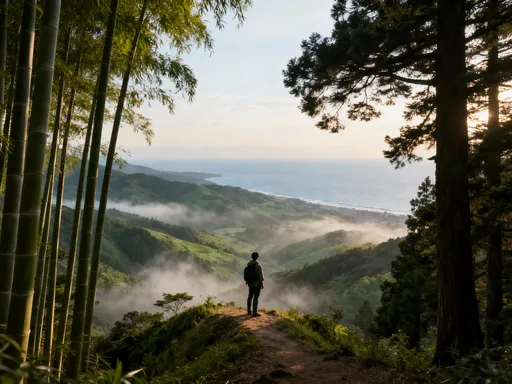
The true magic of Temburong unfolds once the trail leaves the riverbank and ascends into the primary rainforest. Towering trees draped in moss and vines create a cathedral-like canopy overhead, filtering sunlight into soft green patterns on the forest floor. The air is thick with moisture, carrying the earthy aroma of decaying leaves and the sweet scent of wild orchids clinging to branches. Every step forward brings new sounds—the distant call of hornbills, the rustle of squirrels in the undergrowth, the occasional splash of a monitor lizard slipping into a stream. It’s a symphony of life, uninterrupted by the noise of modernity.
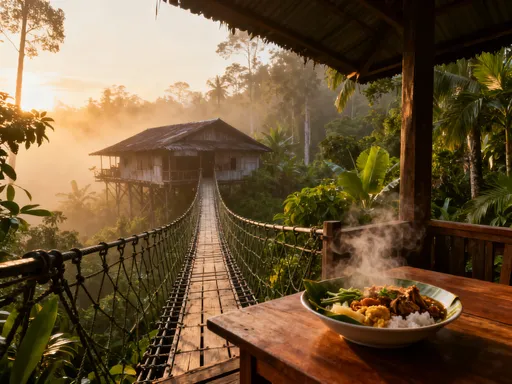
One of the highlights of the trek is the series of canopy walkways suspended high above the ground. These steel-and-wood bridges, anchored to living trees, offer panoramic views of the surrounding forest. Standing 30 meters above the forest floor, hikers can see the undulating sea of green stretching endlessly in every direction. On clear mornings, mist rises like smoke from the valleys, creating an ethereal atmosphere that feels almost otherworldly. From this vantage point, it’s possible to spot bird species such as the blue-throated bee-eater or the rhinoceros hornbill, whose distinctive calls echo through the treetops. The sensation of walking among the branches, with nothing but air beneath your feet, is both exhilarating and humbling.
River crossings add another layer of adventure to the hike. Using simple log bridges or stepping stones, trekkers navigate narrow jungle streams where crystal-clear water flows over smooth rocks. These moments slow the pace, forcing hikers to focus on balance and coordination. The coolness of the water offers brief relief from the heat, and some stops allow time to dip hands or feet, listening to the gurgle of the current. Along the banks, pitcher plants grow in shaded crevices, their colorful traps waiting for unsuspecting insects. Ferns unfurl in delicate spirals, and fungi bloom in vibrant hues on fallen logs. Each element contributes to the overwhelming sense of biodiversity that defines Temburong’s ecosystem.
Beyond the Trail: The Unexpected Role of Food in the Wilderness
After hours of physical exertion, the body craves sustenance, and in the jungle, even simple food tastes extraordinary. The combination of humidity, elevation changes, and constant movement amplifies hunger in a way that city life rarely replicates. But in Temburong, the meal at the end of the trail is not just a reward—it’s a cultural event. For the local communities, sharing food is an expression of hospitality, a gesture of welcome that transcends language. As dusk settles and the forest cools, the anticipation of dinner becomes a central part of the journey, shifting the focus from physical endurance to communal connection.
In Bruneian culture, meals are more than nutrition—they are acts of care, identity, and continuity. Preparing food using ancestral methods is a way of honoring tradition and maintaining a link to the land. When visitors are invited into a longhouse or village homestay, they are not merely guests; they are participants in a living cultural practice. The act of sitting together, eating with hands, and passing dishes around a shared table fosters intimacy and mutual respect. It’s a reminder that travel is not just about seeing new places, but about forming human connections that linger long after the journey ends.
As the sun dips below the canopy, the scent of wood smoke and sizzling spices begins to drift through the air. Children giggle as they help set out mats and bowls, elders exchange quiet words in Dusun or Iban, and the rhythm of daily life slows into evening calm. The contrast between the day’s intensity and the night’s serenity is striking. The jungle, once a challenge to traverse, now becomes a backdrop for warmth, storytelling, and nourishment. This transition—from exertion to rest, from isolation to belonging—is what makes the dining experience so powerful. It’s not just about what is eaten, but how and why it is shared.
Dining Deep in the Jungle: A Taste of Authentic Temburong
Dinner in a Temburong village is a feast of textures, flavors, and traditions. The centerpiece of the meal is often ambuyat, a sticky, translucent porridge made from sago palm starch. Served in a small bowl with a side of dipping sauce—usually a spicy sambal made with chili, shrimp paste, and lime—ambuyat is eaten by rolling it around a fork or chopstick and dipping it into the condiment. Its mild taste serves as a perfect base for the bold accompanying dishes. While unfamiliar to many outsiders, ambuyat is deeply symbolic, representing sustenance drawn directly from the forest.
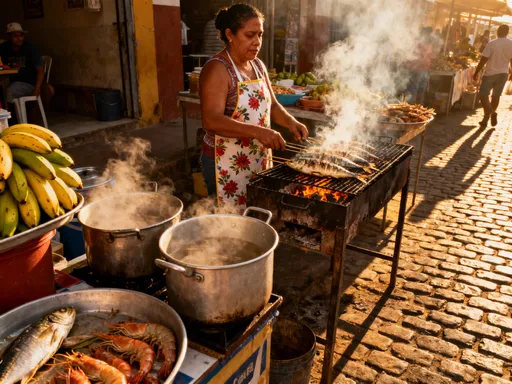
Alongside ambuyat, guests are treated to grilled river fish, often caught that morning from nearby streams. Wrapped in banana leaves and cooked over open flames, the fish retains a smoky tenderness, enhanced by a marinade of turmeric, garlic, and ginger. Ulam, a platter of fresh jungle herbs, edible flowers, and raw vegetables, adds crunch and freshness. Each ingredient has a purpose—some aid digestion, others are believed to boost immunity. Sambal belut, a pungent eel-based chili paste, delivers a fiery kick that awakens the palate. Other dishes may include bamboo shoot stew, wild fern curry, or smoked wild boar, depending on seasonal availability and family recipes passed down through generations.
The dining experience unfolds slowly, without rush. Food is served in communal dishes, encouraging sharing and conversation. Elders are served first, reflecting cultural values of respect and hierarchy. There is no formal seating—people sit on floor mats, cross-legged or reclined, eating with their right hands as tradition dictates. Music may accompany the meal, with someone strumming a guitar or singing folk songs in a local dialect. Laughter rises and falls, stories are exchanged, and the warmth of the fire casts flickering shadows on the wooden walls of the longhouse. In this setting, food becomes more than fuel; it becomes a bridge between cultures, a moment of genuine human connection forged in the heart of the jungle.
From Farm to Fork: The Story Behind the Meal
Every dish served in Temburong tells a story of sustainability and deep ecological knowledge. The sago palms used for ambuyat are harvested selectively, ensuring the tree can regenerate. Villagers tap the trunk, extract the pith, and process it by hand—washing, pounding, and straining until the starch settles. This labor-intensive method has remained unchanged for centuries, relying on skill rather than machinery. Similarly, fish are caught using traditional lines or traps that do not deplete stocks, and hunting is done in accordance with seasonal cycles and community rules to prevent overharvesting.
Herbs and vegetables are gathered from the surrounding forest or grown in small kitchen gardens using organic methods. No synthetic fertilizers or pesticides are used; instead, crop rotation and natural compost maintain soil health. Women often lead these efforts, passing down knowledge of which plants are safe to eat, when they are in season, and how to prepare them. For example, the leaves of the simpoh air plant are used to wrap fish before grilling, imparting a subtle citrus flavor, while the roots of the kantan flower are added to soups for their aromatic qualities. This intimate relationship with the land ensures that food is not only nutritious but also deeply connected to place.
Interviews with local hosts reveal a profound sense of pride in their culinary heritage. One elder explained, “We don’t grow food to sell. We grow it to feed our family and share with guests. This is how we have lived for generations.” Another host emphasized the importance of teaching children these skills: “If they don’t learn now, who will carry it forward?” These sentiments reflect a worldview in which food is not a commodity but a cultural treasure. The low environmental impact of this food system—relying on renewable resources, minimal packaging, and zero waste—stands in stark contrast to industrial agriculture. In Temburong, sustainability is not a trend; it is a way of life.
Why This Experience Changes How You Travel
The journey through Temburong reshapes the very idea of adventure travel. It moves beyond checklist tourism—where the goal is to photograph landmarks or tick off destinations—and instead emphasizes presence, participation, and personal transformation. Hiking through the rainforest challenges the body, but dining with a local family nourishes the spirit. Together, these experiences create a holistic understanding of a place, one that integrates physical engagement with cultural immersion. Travelers leave not just with memories, but with new perspectives on sustainability, community, and the value of slow, intentional living.
In a world where tourism often prioritizes speed and convenience, Temburong offers a counter-narrative. It asks visitors to slow down, to listen, to eat with their hands, and to accept hospitality on its own terms. This kind of travel fosters empathy and respect, breaking down the barrier between “visitor” and “local.” It encourages mindfulness—about what we consume, how we interact with nature, and how we connect with others. The lessons learned here extend far beyond the jungle; they influence how people travel elsewhere, inspiring them to seek out meaningful encounters rather than superficial attractions.
Moreover, supporting community-based tourism in Temburong has tangible benefits. Income from homestays, guided treks, and cultural demonstrations provides economic opportunities in a region with limited infrastructure. It empowers local people to preserve their traditions while adapting to the modern world on their own terms. For travelers, knowing that their visit contributes positively to a community adds depth and purpose to the journey. It transforms tourism from a one-sided exchange into a reciprocal relationship, where both guest and host gain something valuable.
Temburong offers more than just a hike—it delivers a complete story told through movement and flavor. The trail shapes the body, but the meal nourishes the soul. In a world of rushed tourism, this journey reminds us that the best destinations don’t just show you a place—they let you taste, feel, and live it. For those ready to go deeper, Brunei’s green frontier is waiting.