You Won’t Believe What Lies Beneath Sokcho’s Wild Terrain
Sokcho, South Korea, isn’t just about temple trails or seafood markets—its real magic lies in the land itself. I went looking for peace and found something way more powerful: a landscape that shifts from misty peaks to rocky shores in minutes. The terrain here doesn’t just challenge your steps—it rewires your senses. If you're craving raw, untamed nature that feels personal and wild, Sokcho’s dramatic earthscapes might be your next obsession. This is a place where mountains rise like ancient sentinels from the edge of the sea, where every trail tells a story of fire, ice, and time. More than a destination, Sokcho offers a dialogue between body and earth—one that resonates long after you’ve left its soil.
The First Glimpse: Arriving in a Land of Sharp Contrasts
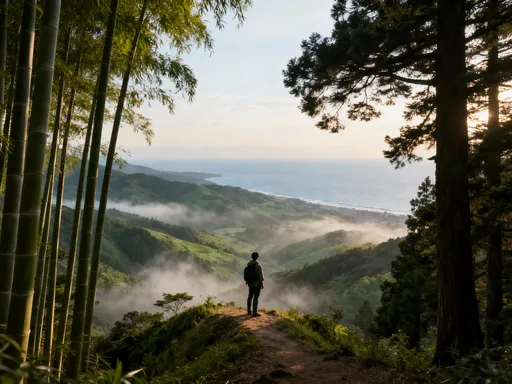
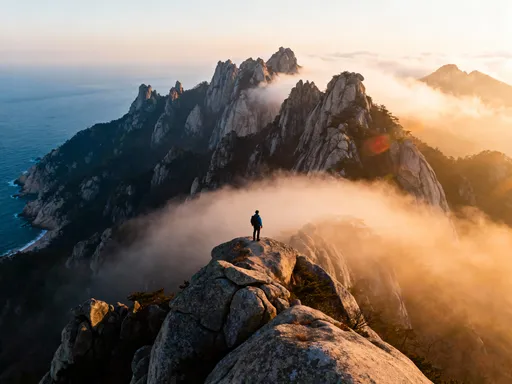
As the bus winds down from the inland highways toward Sokcho, a transformation unfolds beyond the window. One moment, the land is soft—rolling hills dotted with pine and farmland; the next, the earth rises sharply into jagged ridges cloaked in mist. To the west, the Seoraksan mountain range cuts into the sky like a serrated blade, its peaks dusted with snow even in early spring. To the east, the gray-blue expanse of the East Sea stretches endlessly, its waves whispering against rocky bluffs. This is not a gradual transition. Sokcho exists in the tension between these two forces—granite and water—making it one of the most geologically dramatic regions in South Korea.
What sets Sokcho apart is not merely its proximity to nature, but the immediacy with which it surrounds you. Unlike other cities where mountains or coastlines are destinations unto themselves, here, both are present at once. You can stand in a city park and see snowcapped peaks to the west while smelling salt on the breeze from the sea just minutes away. This duality isn’t just scenic—it shapes the rhythm of daily life. Residents speak of the 'mountain wind' and the 'sea fog' as if they are characters in a long-running story, each with its own temperament and timing. The terrain dictates when roads close, when boats stay docked, and when the best mushrooms appear in the forest.
Geologically, Sokcho sits at the edge of the Okcheon Fold Belt, where ancient tectonic movements have folded and fractured the earth’s crust over hundreds of millions of years. This history is visible in the way rock layers tilt at improbable angles along coastal cliffs, and in the boulders scattered like forgotten relics across forest floors. The city is built on a boundary—between the stable continental block to the west and the more dynamic, earthquake-prone zone to the east. It’s this instability that has given rise to such dramatic scenery. The land here isn’t settled; it’s still negotiating with time. And for the traveler, that means every step feels charged with the energy of something ancient and alive.
Seoraksan National Park: Where Rock and Ice Tell Time
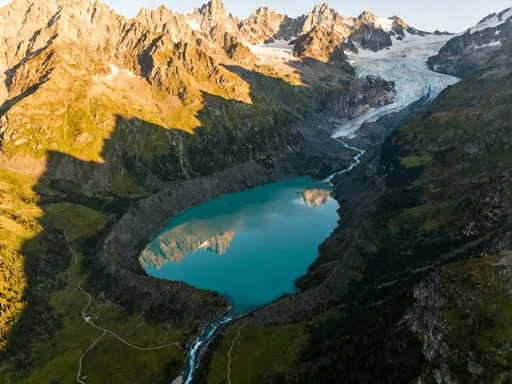
No discussion of Sokcho’s terrain is complete without turning to Seoraksan National Park, a UNESCO Biosphere Reserve and one of Korea’s most revered natural landmarks. Covering over 360 square kilometers, the park is a sanctuary of granite spires, alpine valleys, and glacial valleys carved by ice that retreated millennia ago. The rock itself—primarily Cretaceous-era granite—is over 80 million years old, formed from molten magma that cooled deep beneath the surface before being exposed by erosion. Today, those same forces continue to shape the landscape, one grain of sand at a time.
Hikers who ascend the park’s main trails quickly become aware of the land’s scale and severity. The path to Biseondae Cliff, for example, follows a narrow ridge above a roaring stream, with drop-offs that make even seasoned walkers pause. The cliff itself is a natural amphitheater of layered stone, where legend says a dragon once played music on the wind. Scientifically, it’s a textbook example of exfoliation—where outer layers of rock peel away due to temperature fluctuations and pressure release. The result is a curved, almost sculpted face that glows amber in the late afternoon sun.
Further inland, Ulsanbawi Rock stands as one of the park’s most iconic formations. Its five towering pillars rise like stone sentinels from the forest floor, shaped by vertical jointing and frost wedging. The climb to the top is strenuous but rewarding, offering panoramic views of ridgelines that ripple into the distance like frozen waves. What’s most striking isn’t just the height, but the silence—a stillness so deep it feels geological. On clear days, you can see all the way to the coast, a reminder that mountain and sea are closer here than anywhere else in Korea.
Seasonal shifts further transform the park’s character. Winter turns Seoraksan into a monochrome dreamscape, where ice coats every branch and boulder in glassy armor. Trails become narrow corridors of blue-white light, and frozen waterfalls hang like chandeliers from cliff faces. This is not a time for casual strolls; it demands respect, proper gear, and awareness of avalanche risks in certain zones. Yet for those prepared, winter hiking offers a rare intimacy with the land—when the crowds fade and the mountain feels like yours alone. Spring brings meltwater cascading down every slope, while autumn drapes the valleys in fiery hues of maple and birch. Each season reveals a different layer of the terrain’s story, proving that time here is not linear, but cyclical and deeply felt.
Coastal Anomalies: When Mountains Meet the Sea
While many coastal cities in Korea boast sandy beaches or gentle tides, Sokcho’s shoreline defies expectation. Here, the mountains do not retreat gracefully—they plunge directly into the East Sea, creating a coastline of dramatic cliffs, sea stacks, and hidden coves. This is not a place of gradual slopes or dunes, but of sudden edges, where a single misstep could send a stone tumbling hundreds of feet into the surf. The effect is both awe-inspiring and humbling, a reminder that nature here operates on its own terms.
The geological reason for this rarity lies in the region’s tectonic history. Unlike the passive margins found along much of Korea’s southern coast, Sokcho sits near an active zone where the Eurasian Plate interacts with the subducting Pacific Plate. This has resulted in uplifted terrain that resists erosion, allowing mountains to maintain their height even at the water’s edge. At places like the foothills of Cheoksan Mountain, the transition from forest to cliff to sea happens within a few hundred meters, a phenomenon rarely seen on such a scale.
Walking along designated coastal paths, visitors encounter a sensory tapestry unlike any other. The air carries the sharp tang of salt and seaweed, mingling with the damp, earthy scent of moss-covered rock. Waves crash against basalt formations with a rhythm that feels ancient, their force sculpting caves and arches over centuries. On foggy mornings, the sea disappears into a gray veil, and the only sounds are gulls and the distant boom of water against stone. In summer, sunlight fractures through the mist, illuminating patches of lichen in bright orange and green—a living mosaic clinging to the rock.
These coastal zones are also ecologically significant. The intertidal areas support a variety of marine life, from crabs and sea snails to rare seaweed species adapted to the cold, nutrient-rich waters. Birdwatchers may spot black-tailed gulls or even the occasional peregrine falcon nesting in high crevices. Conservation efforts have helped protect these fragile ecosystems, with strict guidelines against littering, climbing on unstable rocks, or disturbing wildlife. The message is clear: this beauty is not for conquest, but for quiet observation.
Hidden Valleys and Secret Streams: Off-Trail Discoveries
Beyond the marked trails and popular viewpoints lie quieter corners of Sokcho—places where the forest closes in, streams murmur over smooth stones, and the sense of discovery returns. These are not destinations with names on maps or signs at the entrance, but small gorges, spring-fed rivulets, and sheltered basins tucked between ridges. They are the kind of places where time slows, where the only footprints may be your own, and where the land feels less like a spectacle and more like a conversation.
Exploring these areas requires a different kind of attention—one that values stillness over speed, observation over conquest. A narrow path might lead to a hidden waterfall no taller than a person, yet alive with movement and sound. A bend in a stream could reveal a pool so clear you can see every pebble on the bottom, ringed by ferns and moss that seem to glow in the filtered light. These moments are not grand, but they are profound—a reminder that wilderness exists not only in vast parks but in the overlooked spaces between them.
To preserve these fragile environments, low-impact exploration is essential. Staying on existing paths, avoiding shortcuts, and carrying out all waste are basic but critical practices. Hikers should avoid disturbing vegetation, especially in damp areas where recovery is slow. The use of drones or loud equipment is discouraged in these zones, not out of restriction, but respect. These valleys are not stages for performance—they are sanctuaries for reflection.
For those seeking solitude, early mornings or late autumn visits offer the best chance of quiet. The air is cooler, the light softer, and the trails less traveled. A simple picnic—bread, fruit, and tea in a thermos—becomes a ritual of presence. There is no need for grand gestures here. Just sitting by a stream, watching water move over stone, can feel like a form of meditation. In a world that often demands constant motion, these hidden valleys offer something rare: the permission to simply be.
How the Terrain Shapes Local Life and Culture
The people of Sokcho do not merely live near dramatic terrain—they live because of it, and in response to it. Generations have adapted to the rhythms of mountain and sea, developing ways of life that honor both abundance and limitation. Farming, for example, takes place on narrow terraces carved into hillsides, where every inch of soil is precious. These plots grow hardy vegetables like radishes, potatoes, and perilla leaves—crops that can withstand cold winds and short growing seasons. The result is a cuisine rooted in resilience, where flavor comes not from extravagance, but from deep connection to the land.
Architecture, too, reflects the environment. Traditional homes in rural areas often feature low profiles, thick walls, and sloped roofs designed to shed heavy snow. Windows face south to capture sunlight, while back walls are built to resist the biting northeasterly winds that sweep in from the sea. Even modern buildings in the city center incorporate these principles, using local stone and wood to blend with the natural palette. There is a quiet dignity in this practicality—a refusal to dominate the landscape, and instead, to belong within it.
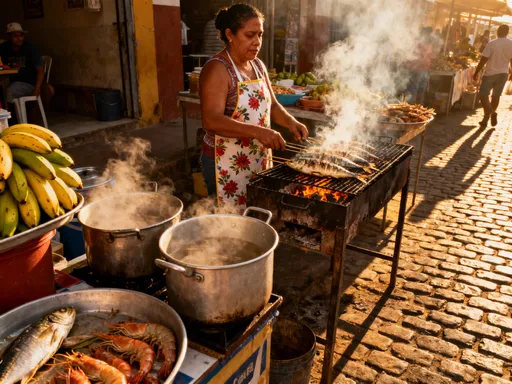
Seasonal festivals further illustrate this bond. In spring, communities gather to celebrate the first harvest of mountain greens, a tradition that honors both nourishment and renewal. Autumn brings festivals centered on seafood, particularly squid and pollock, caught in the cold currents just offshore. These events are not tourist performances; they are lived traditions, passed down through families, where songs are sung, dances are shared, and meals are eaten together. The terrain is not just a backdrop—it is a participant.
Even language carries echoes of the land. Local dialects include words for specific types of fog, snowfall, and rock formations—nuances that outsiders might miss but that carry deep meaning for those who depend on them. A fisherman can tell the day’s conditions by the color of the sea; a hiker knows when a storm is coming by the way the wind shifts through the pines. This knowledge is not taught in classrooms; it is learned through years of attention, a quiet wisdom passed from hand to hand, eye to eye.
Smart Exploration: Navigating Sokcho’s Challenges
Visiting Sokcho’s diverse terrain requires preparation, not just for comfort, but for safety and respect. The region’s rapid shifts in elevation and weather mean that conditions can change within hours. A sunny morning on the coast can give way to fog and rain in the mountains by afternoon. Travelers should always check forecasts before setting out and carry layers, including a waterproof jacket, even in summer. Sturdy hiking boots with ankle support are essential, especially on rocky or icy paths.
Transportation between zones is relatively accessible. Local buses connect Sokcho city with trailheads in Seoraksan National Park, and taxis are available for more remote starting points. For those without a car, planning is key—schedules can be infrequent, and last departures may be earlier than expected. Biking is another option for coastal routes, though strong winds can make it challenging. Rental shops in the city offer well-maintained equipment and maps, often with staff who can advise on current trail conditions.
Timing visits can enhance both experience and sustainability. Early mornings on weekends still attract crowds, but weekday visits—especially in spring or late autumn—offer quieter trails and clearer views. Summer brings humidity and tourists; winter brings beauty but also hazards like black ice and limited access to higher elevations. The best strategy is often to combine mountain and coast in a single day, starting with an early hike and ending with a walk along the shoreline as the light fades.
Responsible tourism is not optional here—it is necessary. This means staying on marked trails, avoiding shortcuts that cause erosion, and never removing natural materials like rocks or plants. Feeding wildlife, even birds, disrupts delicate balances. And while social media has made certain spots famous, the goal should not be the perfect photo, but the full experience—the sound, the scent, the feeling of the ground beneath your feet. Sokcho rewards those who come not to conquer, but to connect.
Why This Landscape Stays With You
Long after leaving Sokcho, many travelers report a lingering sensation—not just memory, but a physical echo. It might be the way your body remembers the incline of a mountain path, or how your mind returns to the sound of waves against stone. This is not mere nostalgia. It is the imprint of a landscape that demands presence. In a world saturated with screens and schedules, Sokcho offers a rare invitation: to slow down, to feel, to be recalibrated by the rawness of earth and water.
The terrain here does not soothe in the way of a spa or a quiet room. Its power lies in its honesty—in the way it exposes you to wind, to effort, to silence. There is no artifice, no filter. You are not a guest in a curated experience; you are a participant in an ancient system. And in that participation, something shifts. Decisions that once felt overwhelming begin to clarify. Worries that once loomed large lose their edge. This is not because the mountains offer answers, but because they create space for you to hear your own.
For women in their thirties, forties, and beyond—many of whom carry the weight of family, work, and endless to-do lists—Sokcho’s terrain can feel like a quiet rebellion. It does not ask for productivity. It does not measure worth in output. It simply asks you to walk, to breathe, to notice. And in that simplicity, there is freedom. You are not escaping life by coming here; you are returning to it—on a deeper, more elemental level.
So if you find yourself craving a journey that moves more than just your body, consider Sokcho. Not for the postcard views, though they are stunning. Not for the bragging rights, though the trails are worthy. But for the way the land rises to meet you, unfiltered and unafraid. For the way a single step on wet stone, a breath of cold mountain air, can realign your entire sense of what matters. This is not just travel. It is transformation—quiet, lasting, and entirely your own.