You Won’t Believe This Hidden Architectural Gem in Osh, Kyrgyzstan
I never expected to find such breathtaking architecture in a Central Asian city tucked between mountain ranges. Osh, Kyrgyzstan, isn’t just a cultural crossroads—it’s a living museum of Soviet-era blocks, Islamic motifs, and traditional wooden homes. Every alley tells a story. From vibrant bazaars to quiet hillside mosques, the city blends history and modernity like nowhere else. This is not your typical tourist trail. It’s real, raw, and absolutely stunning. Few travelers make it this far south, yet those who do are rewarded with an urban landscape that defies expectations. Osh doesn’t perform for cameras; it simply exists, layered with centuries of adaptation, resilience, and quiet beauty. Here, architecture isn’t about grand statements—it’s about survival, identity, and the daily rhythm of life.
The First Glimpse: Arriving in Osh and the Initial Architectural Surprise
For most visitors, Osh arrives not with fanfare but with a quiet revelation. Whether stepping off a dusty marshrutka after a winding ride from Bishkek or landing at the modest domestic airport, the first views of the city unfold gradually. Nestled at the southern edge of the Fergana Valley, Osh spreads out beneath the protective shadow of Mount Sulayman, its skyline a patchwork of textures and tones. The initial impression is one of organized chaos—low-rise buildings stretching in all directions, interspersed with bursts of green courtyards and the occasional flash of turquoise tile. This is not the polished facade of a capital city, nor the preserved old town of a European destination. Instead, it is a working city, shaped by necessity, climate, and centuries of cultural exchange.
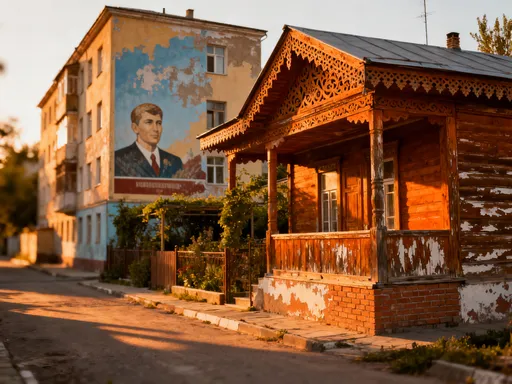
Expectations of a small, sleepy Central Asian town are quickly dispelled. What becomes evident almost immediately is the architectural layering that defines Osh. Soviet-era apartment blocks stand shoulder to shoulder with one-story homes featuring intricately carved wooden eaves. Narrow alleys open into wide boulevards lined with poplar trees, remnants of a planned urban vision from the mid-20th century. The city’s layout reflects its role as a regional hub—functional, adaptable, and deeply rooted in its geography. Unlike more touristed cities in the region, Osh has not been sanitized for visitors. Its streets are lived-in, its buildings weathered but cared for, and its aesthetic is one of authenticity rather than curation.
This architectural diversity signals something deeper: a city shaped by multiple identities. Turkic traditions, Persian influences, Russian planning, and modern Kyrgyz national pride all leave their mark. The wooden balconies and latticework recall Central Asian craftsmanship, while the wide avenues and symmetrical housing complexes speak to Soviet urban ideology. Yet none of these elements dominate. Instead, they coexist, creating a visual language that is both familiar and surprising. For the observant traveler, Osh offers not just a destination but a narrative—one written in brick, wood, and concrete.
Soviet Legacy: The Gray Giants That Define the Skyline
As one moves through central Osh, the most visible architectural presence is unmistakable: the Soviet-era apartment blocks that rise like gray sentinels across the city. Constructed primarily between the 1960s and 1980s, these five- to nine-story buildings were designed for efficiency, not elegance. Their prefabricated concrete panels, repetitive facades, and uniform balconies reflect a utilitarian philosophy that prioritized mass housing over aesthetic variation. Wide avenues, such as Chui Avenue and Lenin Street, were laid out to accommodate military parades and state processions, reinforcing the idea of centralized control through urban design.
Yet what could have been a monotonous landscape has been transformed by time and human touch. Many of these buildings, once uniformly drab, now wear bright coats of paint—soft blues, warm yellows, even mint greens—that soften their rigid geometry. Ground floors, originally intended for minimal commercial use, have been converted into bustling shops, cafes, and repair stalls. Satellite dishes, colorful laundry lines, and potted plants on balconies add personal flourishes to an otherwise impersonal design. These adaptations are not acts of rebellion but of survival and self-expression, proof that even the most rigid structures can be reshaped by daily life.
More than half of Osh’s population still lives in these Soviet-era complexes, a testament to their durability and practicality. While newer construction has emerged, these buildings remain the backbone of the city’s housing stock. Their endurance speaks to a broader truth about post-Soviet urban life: infrastructure outlives ideology. The original architects may have envisioned a future of collective living under state supervision, but today’s residents have repurposed these spaces for family life, small enterprise, and community. In this way, the Soviet legacy in Osh is not frozen in time—it is actively being rewritten by those who call it home.
Traditional Kyrgyz Touches: Wooden Lattices, Courtyards, and Family Life
While the Soviet blocks dominate the central avenues, a different architectural tradition thrives in Osh’s residential neighborhoods. Here, one-story homes with wooden eaves, latticed windows, and shaded courtyards offer a glimpse into enduring Kyrgyz craftsmanship. These houses, often referred to locally as *dachas* or family compounds, are more than shelters—they are expressions of cultural values, particularly hospitality and family cohesion. The ornate wooden frames around windows and doors, known as *ozek*, are hand-carved with geometric and floral patterns, each design reflecting regional styles passed down through generations.
The layout of these homes is equally significant. Most follow a semi-circular or U-shaped plan, enclosing a central courtyard that serves as the heart of domestic life. This space is used for cooking in summer, hosting guests, and even sheltering animals during colder months. At the front of the house, the *hayat*—a raised, carpeted sitting area—functions as the formal reception room. Guests are welcomed here, served tea, and offered sweets in a ritual that underscores the importance of respect and generosity. The architecture itself facilitates this social rhythm; the open doorway, the low threshold, and the absence of barriers between indoor and outdoor spaces all invite connection.
Even as modern materials like concrete and steel become more common, many new constructions in Osh’s outskirts deliberately mimic traditional designs. Faux wooden beams, decorative window grilles, and courtyard layouts are incorporated into homes that might otherwise look contemporary. This blending of old and new suggests a deep cultural continuity, a desire to maintain identity even as lifestyles evolve. For families, these architectural choices are not merely aesthetic—they are acts of preservation, quiet declarations of who they are and where they come from. In a rapidly changing world, the traditional Kyrgyz home remains a sanctuary of meaning.
Religious Architecture: Mosques and Shrines Amid Urban Chaos
Religious architecture in Osh does not announce itself with grandiosity. Unlike the towering mosques of Istanbul or Dubai, the city’s places of worship are modest, often integrated seamlessly into the urban fabric. The Sheikh Babur Mosque, located near the city center, is a prime example. Its turquoise dome and slender minaret rise above the surrounding buildings, but its scale remains human, inviting rather than imposing. The exterior features subtle tilework in shades of blue and green, with geometric patterns that echo Islamic artistic traditions without overwhelming the senses.
Smaller neighborhood prayer halls, known locally as *masjids*, are even more understated. Often converted from residential buildings or built as simple single-story structures, they serve as daily gathering points for men and, increasingly, women in separate spaces. Their architecture reflects function over form—clean lines, arched doorways, and minimal ornamentation. What stands out is not their visual impact but their presence in everyday life. A call to prayer echoes through a residential alley; a row of shoes lines the entrance of a modest courtyard mosque. Faith is not isolated in a sacred precinct but woven into the rhythm of the city.
The most spiritually significant site in Osh is the Babur Mausoleum complex atop Mount Sulayman. According to tradition, this is the burial place of Babur, the founder of the Mughal Empire, though historical evidence remains inconclusive. Regardless, the site holds deep reverence. The path to the summit is lined with shrines, prayer flags, and small domed chapels, each blending sacred geometry with the natural contours of the rock. The main mausoleum, rebuilt in the 20th century, features a simple dome and arched entrance, its interior cool and quiet. Pilgrims tie ribbons to nearby trees, a practice rooted in pre-Islamic traditions, illustrating how belief systems in Osh often coexist rather than compete. The architecture here does not dominate the mountain—it converses with it, honoring both faith and nature.
The Heart of the City: Osh Bazaar as Living Urban Design
No discussion of Osh’s architecture would be complete without considering its most dynamic space: the Osh Bazaar. More than just a marketplace, it is an architectural ecosystem in constant motion. Covering several city blocks, the bazaar is a labyrinth of alleys, covered arcades, and open-air zones, each dedicated to a specific trade. The spice section, for instance, is housed under vaulted brick ceilings that trap heat and aroma, creating an almost cathedral-like atmosphere. Nearby, the livestock area unfolds in dirt-packed pens where sheep and goats are inspected by buyers, their sounds and movements adding to the sensory overload.
What makes the bazaar remarkable is how its form follows function in real time. Stalls are temporary, often assembled from wood, plastic sheeting, or repurposed shipping containers. Vendors rearrange their wares daily, responding to supply, weather, and foot traffic. Hand-painted signs in Kyrgyz, Russian, and sometimes Chinese mark the boundaries of each domain, creating a visual language all its own. There is no master plan—only an organic evolution shaped by necessity and tradition. This lack of formal design is precisely what gives the bazaar its authenticity. It is not a reconstructed tourist attraction but a living, breathing organism.
The sensory experience is overwhelming in the best way. Bright mounds of dried apricots, crimson piles of sumac, and golden stacks of halva create a palette of color. The air hums with bartering, laughter, and the sizzle of samsa baking in outdoor ovens. Movement is constant—carts rolling, customers haggling, children weaving through the crowd. The space adapts effortlessly to the rhythms of trade, shrinking and expanding like a lung. For visitors, navigating the bazaar is not just a shopping experience but an immersion in urban life. It is here, more than anywhere else, that Osh reveals its soul: vibrant, unfiltered, and deeply communal.
Modern Twists: New Buildings and the Search for Identity
In recent years, Osh has seen a wave of new construction that reflects both economic growth and cultural uncertainty. Glass-fronted banks, wedding palaces adorned with faux classical columns, and government buildings with mirrored facades now dot the skyline. These structures often follow global trends, borrowing from Gulf-style opulence or generic modernism without fully integrating into the city’s existing aesthetic. The result is a tension between aspiration and authenticity—between wanting to appear modern and fearing the loss of heritage.
Yet within this tension, there are signs of a more thoughtful approach. Some newer buildings incorporate subtle nods to tradition: geometric patterns etched into metal screens, arched windows inspired by Islamic design, or courtyards that echo older residential layouts. A few architects are experimenting with ways to blend Soviet-era scale with Kyrgyz craftsmanship, using local materials and motifs in ways that feel organic rather than forced. These efforts, while still rare, suggest the possibility of a distinct architectural voice—one that doesn’t reject modernity but filters it through local identity.
The challenge lies in balancing development with preservation. Unlike cities in Western Europe or East Asia, Osh does not have strict heritage protection laws or widespread public awareness about architectural conservation. Many historic homes are being demolished to make way for concrete apartments, and traditional craftsmanship is at risk of fading as younger generations pursue other careers. Without intervention, the city risks becoming a generic post-Soviet urban center, indistinguishable from dozens of others across the region. The question is not whether Osh should modernize, but how it can do so without erasing the very qualities that make it unique.
Why This Matters: Preserving Authenticity in a Changing Region
Osh’s architectural landscape matters because it represents something increasingly rare: authenticity in the face of globalization. In an era when many cities are being remade into homogenized versions of each other—filled with chain stores, glass towers, and cookie-cutter apartments—Osh remains defiantly itself. Its buildings are not curated for Instagram; they are shaped by decades of adaptation, resourcefulness, and cultural pride. This authenticity is not just aesthetically valuable—it is socially and historically significant.
For travelers, engaging with Osh means more than sightseeing. It means supporting local artisans by purchasing hand-carved wooden frames or embroidered textiles. It means visiting community spaces like the bazaar or neighborhood mosques with respect, avoiding intrusive photography, and asking permission when appropriate. It means recognizing that architecture is not just about buildings but about the people who live in them. Every painted balcony, every repurposed shipping container, every carved *ozek* tells a story of resilience and identity.
Looking ahead, Osh has the potential to become a model of organic urban development—one where history and modernity coexist without erasing each other. With thoughtful planning, community involvement, and international attention, the city could preserve its architectural heritage while embracing necessary growth. The goal should not be to freeze Osh in time but to allow it to evolve on its own terms. In a world that often values spectacle over substance, Osh reminds us that beauty can be quiet, complex, and deeply human. It is not a destination to be conquered but a place to be understood—one alley, one courtyard, one conversation at a time.